
It can seem a little pointless at times, but putting books into boxes is an inescapable part of finding the right readers.
Genre is just the beginning. With so many books out there, and reader tastes so incredibly specific, the number of subcategories seems almost limitless.
People classify books by genre, then break them down by gender of author, gender of protagonist, POV, which tropes they contain, whether there’s an HEA (happily ever after) ending, and on and on. And those are just some of the bigger categories. Keep going and the branches split in every direction.

I appear to be something of an outlier compared with some readers in terms of my relative open-mindedness. That’s not to say I like all genres equally. I just don’t worry much about detailed classifications and subclassifications. Most books built of good timber have the potential to delight, and reading enjoyment is so subjective that, to my mind, there’s only so much classification can predict. Start it. See if it grabs you. If it doesn’t, set it aside and pick up something else.
But it’s not about what I want as a reader. It’s about what the market wants.
Hence the need to classify books into categories, keywords, descriptions, blurbs, summaries, and all the other metadata the modern book business demands.
Sigh.
So how do I think about the Silas Lopez series?
Well, they’re obviously mysteries, and their primary classification within that group is police procedural. But I also think of them as semi-literary: atmospheric, character-driven mysteries. From the beginning, I wanted to do something a little different.
I wasn’t just looking to write beautiful prose. I wanted to come up with a fresh twist on a genre I’ve loved all my life. My goal has been to deliver all the familiar satisfactions of a classic police procedural without simply reheating the same old formula.
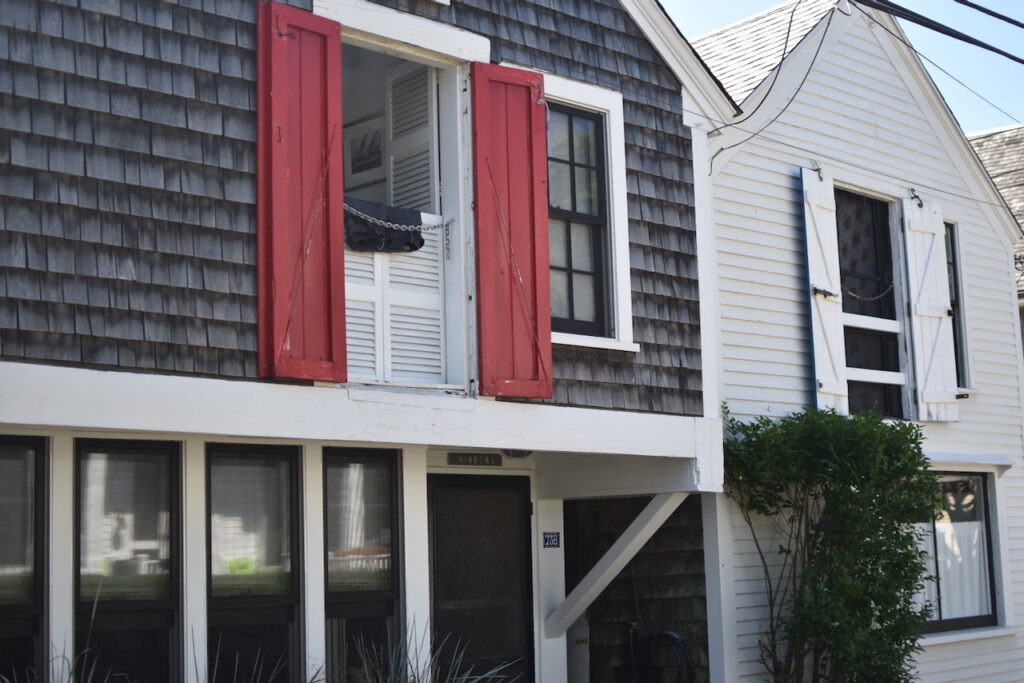
The police work is careful and realistic, the mystery drives the story, and there’s a deeply satisfying backbeat that should feel familiar to anyone who loves the genre. But layered over that is a hero I hope feels completely fresh, storylines that go in unexpected directions, a messy, slow-burning love story that’s given plenty of room to develop across the series, and this extraordinary 400-year-old village at the edge of the continent, surrounded by the Cape Cod National Seashore. Provincetown isn’t just the setting; the beauty and atmosphere of the place seep into everything.
I guess this is what happens when someone who has spent sixty years loving the genre sets out to write an homage to it. I wanted to keep everything that makes the recipe so satisfying without simply serving the same dish again. Think Robert B. Parker’s Spenser or Jesse Stone, William Kent Krueger’s lush sense of place, Michael Connelly’s meticulous police work, and a little of Lee Child’s Reacher-like fearlessness.
Did I succeed? Only time will tell.
Because for all the categories and keywords and metadata, what matters is what happens when the book ends up in a reader’s hands. You can increase the chances of a happy outcome by putting a book in the right box. But at the end of the day, you can’t make the reader like it.
They have to get there themselves.
If you are interested in ordering The Washashore or The Holdfast you can find them at—or order it from— these local bookstores.
Or if you want the convenience and speed of online, but still want to support local bookstores, grab them through Bookshop.org
Reach Out to Me: Facebook Author Page | Say Hi on TikTok | Say Hi on Instagram
Or if you are an EBook or Online person: Kindle eBook | Kindle Unlimited | Amazon Paperback & Hardcover | B&N Paperback & Hardcover
Leave a Review where it helps most with the algorithm: Review The Washashore on Amazon Leave a Review where it also helps a lot: Review The Washashore on Goodreads